
From Earth to Orbit: TPO and rCB in Space Exploration and Advanced Composites
THE STORIES
TYROIL
7/21/20253 min read
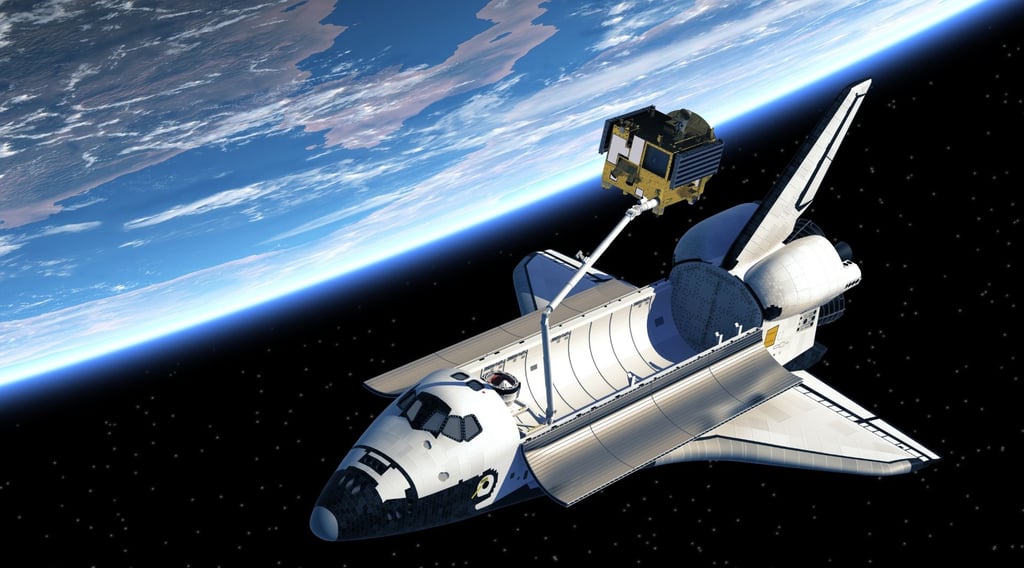
For centuries, humanity has gazed at the stars, dreaming of reaching beyond our terrestrial confines. Space exploration, with its extreme demands for lightweight, durable, and high-performance materials, has always pushed the boundaries of engineering and science. But what if the very waste we generate on Earth could become the building blocks for our cosmic ambitions? This is the audacious, yet increasingly plausible, vision of Tire Pyrolysis Oil (TPO) and recovered carbon black (rCB) finding their way from discarded tires to the cutting edge of space exploration and advanced composites.
At first glance, the connection between a used tire and a spacecraft seems like science fiction. However, the unique properties of carbon-based materials, combined with the drive for sustainability and resource efficiency, are making this a compelling area of research. TPO and rCB, derived from the thermal decomposition of end-of-life tires, offer a sustainable source of carbon that can be engineered into materials capable of withstanding the harsh realities of space [1].
The Quest for Lightweight Strength: rCB in Advanced Composites
In aerospace and space exploration, every gram counts. Lighter materials mean less fuel, larger payloads, and more efficient missions. Carbon fiber composites are already a staple in this industry due to their exceptional strength-to-weight ratio. Recovered carbon black (rCB), with its high carbon content and fine particulate nature, presents an exciting opportunity to enhance or even partially replace virgin carbon materials in these advanced composites.
Imagine a rocket component, a satellite panel, or even a future Martian habitat constructed with materials that incorporate rCB. While direct substitution for high-grade carbon fibers is complex, rCB can be used as a filler or reinforcement in polymer matrices to create lightweight composites with improved mechanical properties. Research is exploring how rCB can enhance the stiffness, strength, and even thermal stability of these materials, making them suitable for demanding aerospace applications [2].
Furthermore, the ability to produce these materials from a recycled source offers significant environmental benefits, reducing the carbon footprint associated with traditional aerospace manufacturing. This aligns with the growing trend towards sustainable practices even in the high-stakes world of space exploration.
TPO Derivatives: Fuels, Polymers, and Beyond for the Final Frontier
TPO, a complex mixture of hydrocarbons, also holds surprising potential for space applications, particularly through its refined derivatives:
Sustainable Rocket Fuels: While highly speculative, the idea of refining TPO into components for sustainable rocket propellants is intriguing. As humanity looks towards long-duration missions and potential off-world colonization, the ability to produce fuels from diverse, non-fossil sources becomes increasingly valuable. TPO, with its hydrocarbon base, could theoretically be processed to yield fuel components that meet the stringent requirements of rocketry [3].
High-Performance Polymers: TPO can be a source of chemical feedstocks for the production of various polymers. These polymers could then be used to create specialized plastics for spacecraft components, insulation, or even as materials for 3D printing in space. Imagine astronauts printing spare parts or tools on a distant planet using materials derived from recycled Earth-bound waste.
Radiation Shielding: Certain carbon-based materials can offer some degree of radiation shielding. While not a primary solution, TPO derivatives or rCB-enhanced composites could potentially contribute to multi-layered shielding systems for spacecraft or habitats, protecting astronauts and sensitive equipment from cosmic radiation.
From Waste to Wonders: The Ultimate Upcycling Story
The journey of TPO and rCB from Earth-bound waste to components for space exploration is perhaps the ultimate upcycling story. It challenges our perceptions of what is possible and underscores the profound interconnectedness of our planet and our aspirations beyond it. By transforming discarded tires into materials for the final frontier, we are not only addressing a terrestrial waste problem but also demonstrating humanity's ingenuity in resourcefulness.
This vision of waste-to-space technology is a powerful testament to the circular economy. It suggests that the solutions to our most complex challenges, both on Earth and in the cosmos, might lie in rethinking our relationship with resources and embracing the transformative power of innovation. The next time you see a discarded tire, imagine it not as an end, but as a potential stepping stone to the stars, fueling humanity's journey into the unknown.
More Related Articles:
The Bio-Integrated Future: TPO and rCB in Sustainable Biotechnology and Bioremediation
From Tires to Transistors: The Unseen Power of rCB in Electronics
The Carbon Chronicles: Tracing the Journey of a Tire from Road to Resource
The Future is Circular: Policy, Innovation, and the Evolution of the TPO Business
References:
[1] ScienceDirect. (2022). Tire pyrolysis char: Processes, properties, upgrading and applications. Retrieved from https://www.sciencedirect.com/science/article/pii/S0360128522000314
[2] ScienceDirect. (2020). Experimental and theoretical investigation on mechanisms... on the RCB composite system with different angles. Retrieved from https://www.sciencedirect.com/science/article/pii/S209526862030183X
[3] Taylor & Francis. (n.d.). TPO – Knowledge and References. Retrieved from https://taylorandfrancis.com/knowledge/Engineering_and_technology/Chemical_engineering/TPO/