
The Quality Quest: Ensuring rCB Meets High Standards for Industry
THE STORIES
TYROIL
7/2/20255 min read
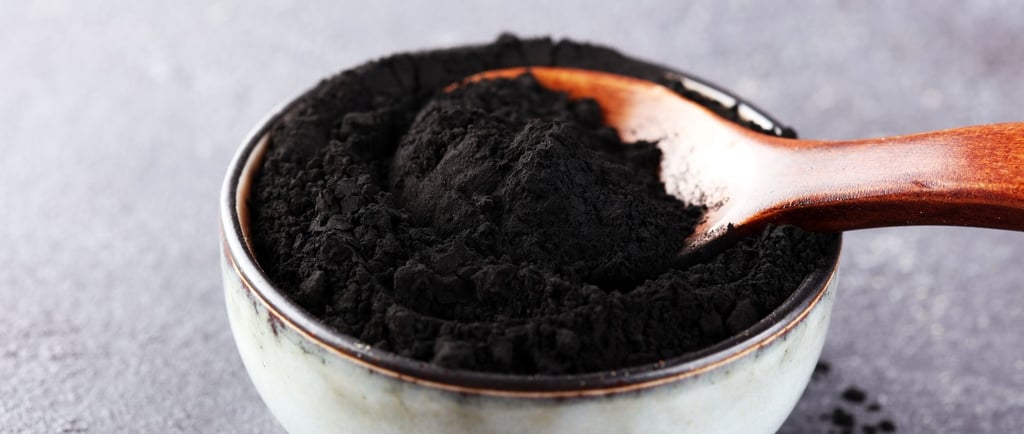
Imagine a world where every product, from the tires on your car to the plastic casing of your washing machine, is made from recycled materials. It sounds ideal, doesn’t it? A truly circular economy where waste is a resource, not a burden. But for this vision to become a reality, recycled materials must meet the same rigorous quality standards as their virgin counterparts. This is especially true for recovered carbon black (rCB), a material born from discarded tires. For industries to embrace rCB, they need assurance that it will perform reliably, consistently, and without compromise. This isn’t just about being green; it’s about being smart, efficient, and competitive. The journey of rCB from a recycled byproduct to a trusted industrial material is a testament to a relentless pursuit of quality, a scientific quest to prove that sustainable can also mean superior.
The Skepticism Barrier: Why Quality Matters
When a manufacturer considers switching from a virgin material to a recycled one, skepticism is often the first hurdle. Will it perform the same? Will it affect my product’s durability? Will it introduce inconsistencies? These are valid concerns, especially for industries where material performance is critical, such as automotive, construction, or electronics. For rCB, the challenge has been to demonstrate that it can indeed replace virgin carbon black (vCB) without sacrificing quality or performance. This requires more than just good intentions; it demands rigorous science, advanced processing, and transparent testing.
The quality of rCB can be influenced by several factors, including the type of waste tires used, the pyrolysis process conditions (temperature, heating rate), and the post-processing steps [1]. Early forms of rCB sometimes suffered from inconsistencies, leading to hesitation from industries. However, significant advancements in recent years have transformed rCB into a high-quality, reliable material, capable of meeting the stringent demands of modern manufacturing.
The Science of Purity: Refining the Black Gold
The journey of rCB from a raw pyrolysis product to a high-grade industrial material involves sophisticated refining processes aimed at enhancing its purity and performance. This is where the science of quality truly shines:
Ash Removal (Demineralization): One of the primary differences between rCB and vCB is the presence of ash, which comes from the inorganic components of the original tire. Advanced physical and chemical methods are employed to reduce ash content, ensuring that the rCB is as pure as possible. Techniques like acid washing or mechanical separation are used to remove minerals and other non-carbonaceous materials [2]. This step is crucial because high ash content can negatively impact the performance of rCB in certain applications.
Particle Size Control and Morphology: The size and shape of carbon black particles significantly influence its properties, such as reinforcement in rubber compounds or tinting strength in pigments. Modern rCB production facilities employ precise control over pyrolysis conditions and subsequent milling processes to achieve desired particle sizes and distributions. This allows for the production of different grades of rCB, tailored for specific applications [3].
Surface Modification: The surface chemistry of carbon black plays a vital role in how it interacts with polymers and other materials. Researchers are developing methods to modify the surface of rCB, enhancing its dispersibility and compatibility with various matrices. This can involve chemical treatments or thermal processes that alter the functional groups on the rCB surface, improving its performance in end products [4].
These refining processes are akin to purifying raw gold – removing impurities to reveal the true value and ensuring that the final product meets the highest standards. The goal is to produce rCB that is not just a substitute, but a preferred choice for its performance and sustainability.
Trust Through Testing: Standardization and Certification
For rCB to gain widespread industry acceptance, trust is paramount. This trust is built through rigorous testing, standardization, and independent certification. Industries need clear, consistent metrics to evaluate rCB and compare it to virgin materials. Key aspects include:
Standardized Testing Methods: Developing and adopting internationally recognized testing methods for rCB properties (e.g., ash content, surface area, particle size, tinting strength, reinforcing capabilities) is crucial. This ensures that rCB from different producers can be consistently evaluated and compared [5].
Performance Validation: Extensive testing in real-world applications is essential. This involves incorporating rCB into various products (tires, plastics, coatings) and evaluating their performance under different conditions to ensure they meet or exceed industry benchmarks. This data-driven approach provides manufacturers with the confidence to integrate rCB into their production lines.
Certification and Traceability: Independent third-party certifications provide an added layer of assurance regarding the quality and sustainability of rCB. Traceability systems ensure that the rCB can be tracked from its source (waste tire) to the final product, providing transparency and accountability throughout the supply chain [6].
Industry Collaboration: Collaboration between rCB producers, material scientists, product manufacturers, and industry associations is vital. This fosters knowledge sharing, accelerates research and development, and helps in establishing best practices and common standards. Workshops, joint research projects, and industry consortia play a crucial role in this process.
A Manufacturer’s Story: From Skepticism to Success
Consider the story of
"Global Tires Inc.", a fictional tire manufacturer. For years, they relied exclusively on virgin carbon black. When approached with rCB, their initial reaction was cautious. "We can't compromise on safety or performance," stated their Head of R&D, Dr. Anya Sharma. "Our tires are designed for millions of miles, and every component must meet our stringent standards."
However, the rCB supplier presented compelling data from independent LCAs and performance tests. Dr. Sharma’s team began rigorous internal testing. They started with small batches, incorporating rCB into non-critical components, meticulously analyzing every aspect: dispersion, tensile strength, abrasion resistance, and fatigue life. They invested in advanced characterization equipment to understand the rCB at a microscopic level.
Slowly, skepticism turned into confidence. They found that with the right grade of rCB and optimized compounding, they could achieve performance comparable to, and in some cases even surpass, their virgin carbon black formulations. The environmental benefits were undeniable, and the cost savings were an added bonus. Today, Global Tires Inc. proudly incorporates rCB into a significant portion of their tire lines, not just for sustainability, but because it’s a high-quality, reliable material. Their story is a powerful example of how scientific rigor and a commitment to quality can overcome initial reservations and drive sustainable innovation.
The Gold Standard of Recycling: rCB’s Journey to Trust
The journey of recovered carbon black from a waste product to a gold standard in industrial materials is a testament to the power of innovation, scientific diligence, and collaborative effort. It’s a journey that addresses fundamental questions about the viability of recycled materials and proves that sustainability doesn’t have to come at the expense of performance.
As industries continue to seek ways to reduce their environmental footprint and embrace circular economy principles, rCB stands as a shining example of what’s possible. Its evolution from a byproduct to a high-quality, trusted industrial material is paving the way for a future where resources are continuously reused, waste is minimized, and industries thrive in harmony with the planet. The quality quest for rCB is not just about a material; it’s about redefining what quality means in a sustainable world.
More Related Articles:
The Unsung Heroes: Unveiling the Power of Pyrolysis By-products
TYROIL: Fueling a Circular Economy with Waste Tires
The Diplomatic Fuel: How TPO Can Foster International Cooperation (Beyond Conflict)
Beyond the Barrel: The Versatile Future of Tire Pyrolysis Oil (TPO) Applications
References
[1] Production and Upgrading of Recovered Carbon Black from the Pyrolysis of End-of-Life Tires. PMC. [https://pmc.ncbi.nlm.nih.gov/articles/PMC8953607/]
[2] Recovered carbon black: A comprehensive review of activation, demineralization, and incorporation in rubber matrices. ResearchGate. [https://www.researchgate.net/publication/391513759_Recovered_carbon_black_A_comprehensive_review_of_activation_demineralization_and_incorporation_in_rubber_matrices]
[3] Production and Characterization of Recovered Carbon Black (rCB) from Waste Tires. SCIEPublish. [https://www.sciepublish.com/article/pii/517]
[4] Chemically treated carbon black waste and its potential applications. ResearchGate. [https://www.researchgate.net/publication/307629825_Chemically_treated_carbon_black_waste_and_its_potential_applications]
[5] Evaluating the reusability of carbon black recovered from waste tyres. ScienceDirect. [https://www.sciencedirect.com/science/article/pii/S2666845925000595]